How Many Different Ways Can 3 Red 4 Yellow and 2 Blue
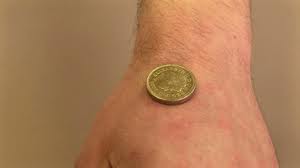 Sample Space (S) – set of all possible outcomes of a statistical experiment.
Example: When a coin is tossed.
Sample points – elements or members of the sample.
Statement or rule – description of sample space with infinite number of sample points or large number of sample points.
Example: S = {(x , y)/ x2 + y2 = 4}, S is a set of all points (x, y) such that these points are on the boundary or interior of circle whose radius is 4 and with center at the origin.
Event – subset of the sample space
The compliment of an event A with respect to S is the subset of all the elements of S that are not in A. The symbol is A'.
The intersection of 2 events A and B,, denoted by the symbol A∩B, is the event containing all the elements that are common in A and B.
The union of 2 events A and B,, denoted by the symbol A ᴜB, is the event containing all the elements that belong to A and B or both.
Two events A and B are mutually exclusive or disjoint if A ∩B = ɸ, that is if A and B have no elements in common.
Multiplication Rule – the fundamental principle of counting sample points
If an operation can be performed in n1 ways, and if for each of the second operation can be performed in n2 ways, then the 2 operations can be performed together in n1n2 ways.
Example: How many sample points are in the sample space when a pair of dice is thrown once?
n1 = 6 ways
n2 = 6 ways
n1 n2 = 36 possible ways
Generalized Multiplication Rule
If an operation can be performed in n1 ways, and if for each of these a second can be performed in n2 ways, and for each of the first two a third operation can be performed in n3 ways, and so forth, then the sequence of k operations can be performed in n1 n2 . . . nk ways.
Example: A developer of a new subdivision offers a prospective home buyer a choice of 4 designs, 3 different heating systems, a garage or carport and a patio or screened porch. How many different plans are available to this buyer?
n1 = 4 ways
n2 = 3 ways
n3 = 2 ways
n4 = 2 ways
n1. n2 . n3 . n4 = (4)(3)(2)(2) = 48 plans
Permutation – an arrangement of all or part of a set of objects
*The number of permutations of n objects is n!
*The number of permutations of n distinct objects taken r at a time is
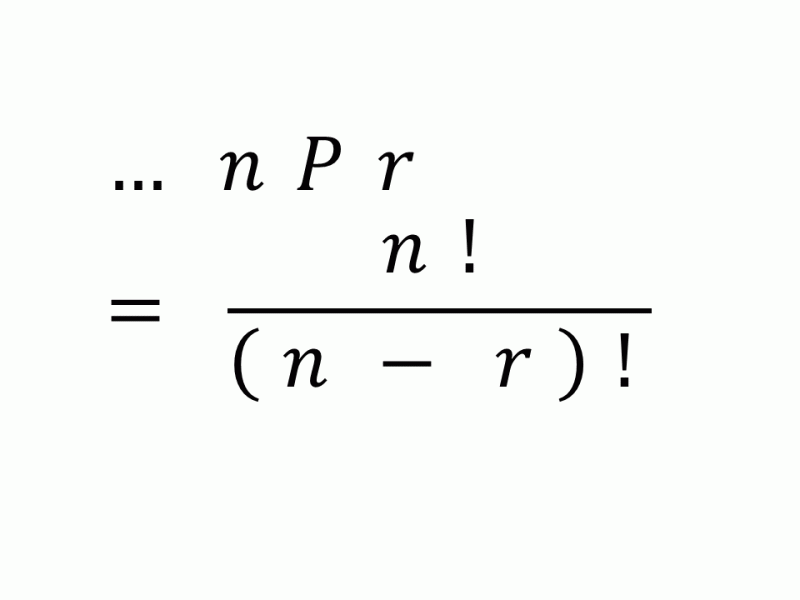
Example: In how many ways can 6 people be lined up to get on a bus?
n = 6; n! = 6! = (6)(5)(4)(3)(2)(1) = 720 ways
Example: Two lottery tickets are drawn from 20 for first and second prizes. Find the number of sample points in the sample space S.
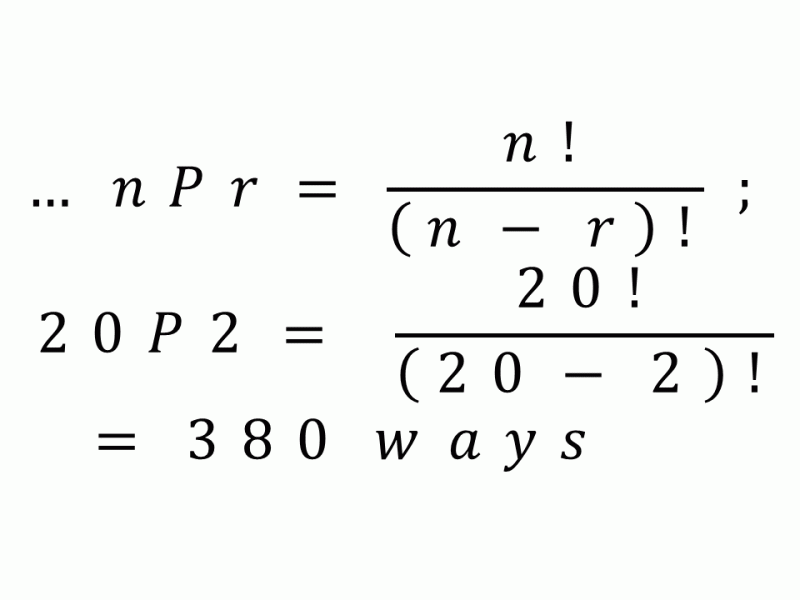
Circular Permutations – permutation that occur by arranging the objects in a circle. The number of permutations of n distinct objects arranged in a circle is (n – 1)!
Example: How many ways can 5 different trees can be planted in a circle?
n = 5; (n – 1)! = (5-1)! = 4! = (4)(3)(2)(1) = 24 ways
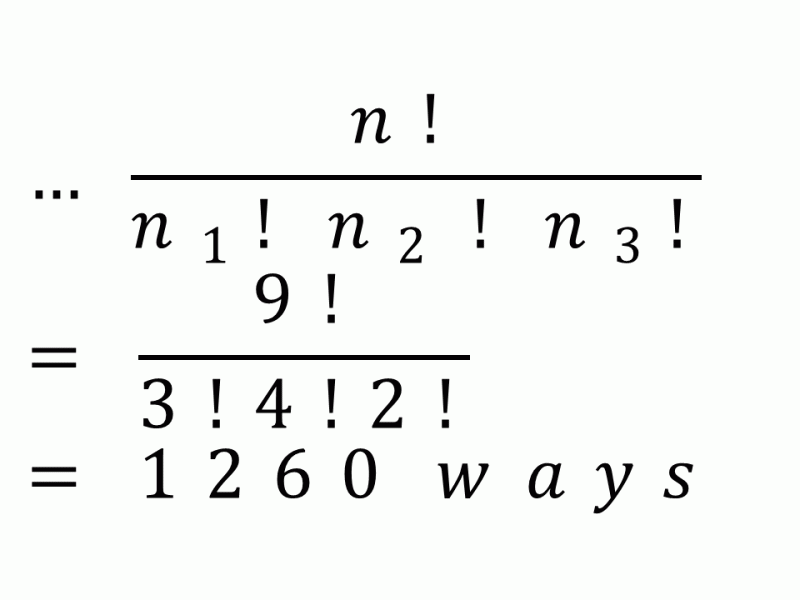
The number of distinct permutation of n things of which n1 are of one kind, n2 of a second kind, . . . nk of nth kind is
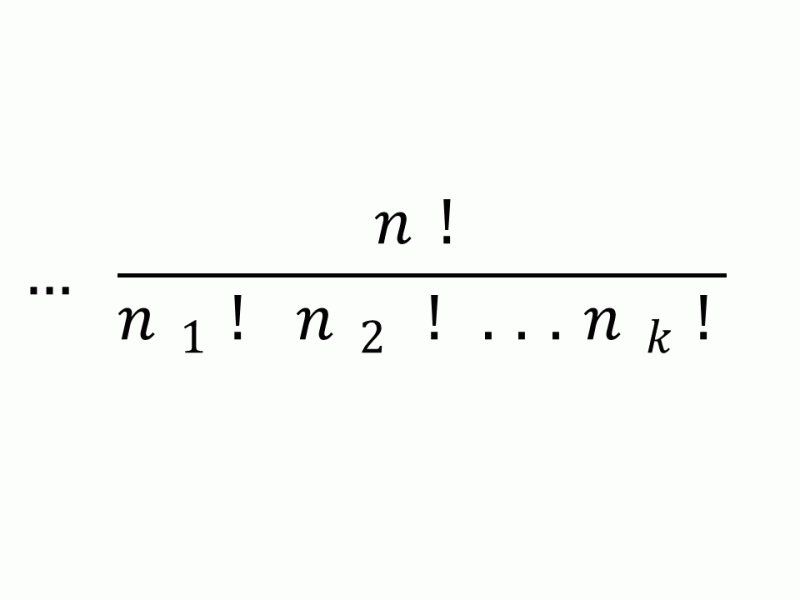
Example: How many different ways can 3 red, 4 yellow, and 2 blue bulbs be arranged in a string of Christmas tree lights with 9 sockets.
n1 = 3 red bulbs
n2 = 4 yellow bulbs
n3 = 2 blue bulbs
n = 9 sockets
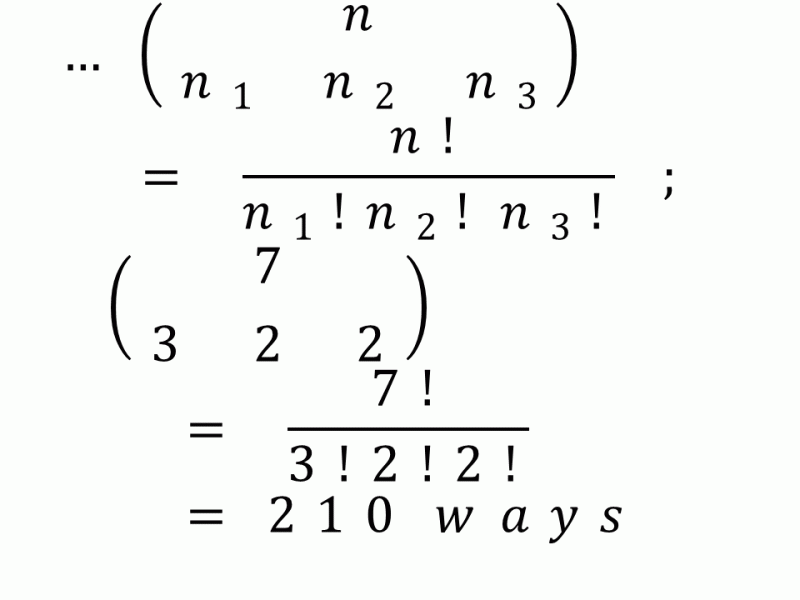
The number of ways of partitioning a set of n objects into 1 cell, with n1, elements in first cell, n2 elements in the second, and so forth is
where
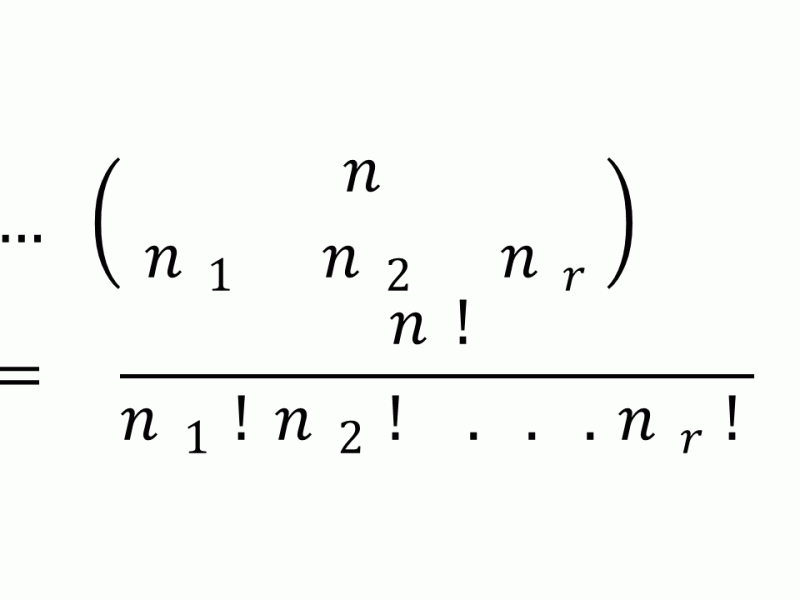
n1+ n2+ . . . + nr = n, and r = number of cells
Example: in how many ways can seven scientists be assigned to one triple and two double hotel rooms?
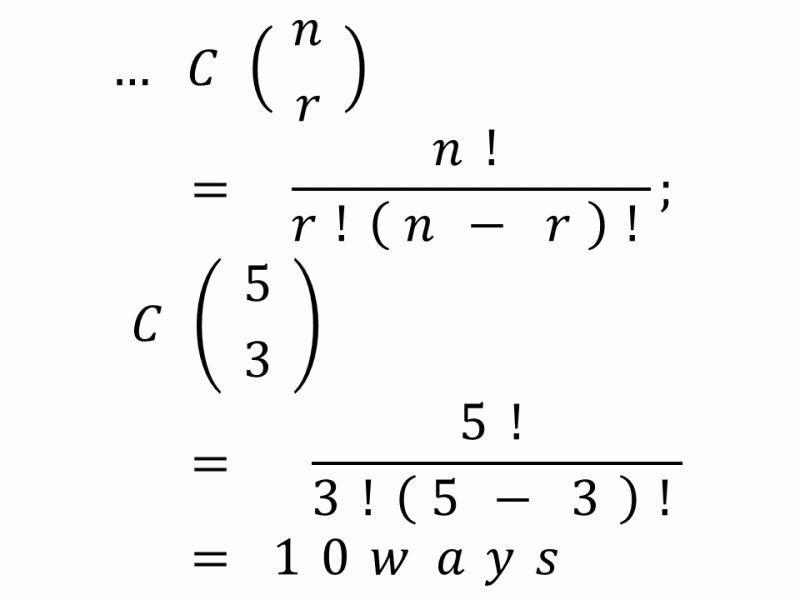
The number of combinations of n objects taken r at a time is
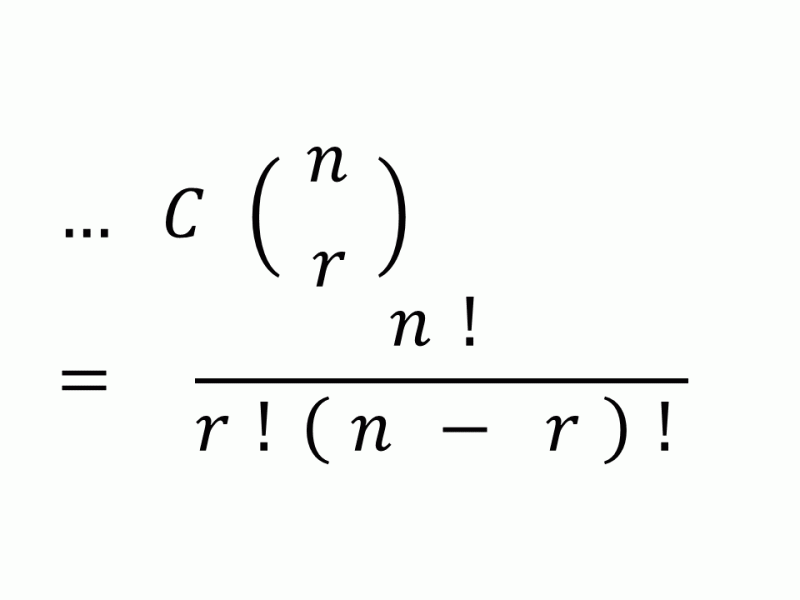
Example: A printed circuit board may be purchased from five suppliers. In how many ways can three suppliers be chosen from the five?
Source: https://ourhappyschool.com/mathematics/lesson-probability
0 Response to "How Many Different Ways Can 3 Red 4 Yellow and 2 Blue"
Postar um comentário